
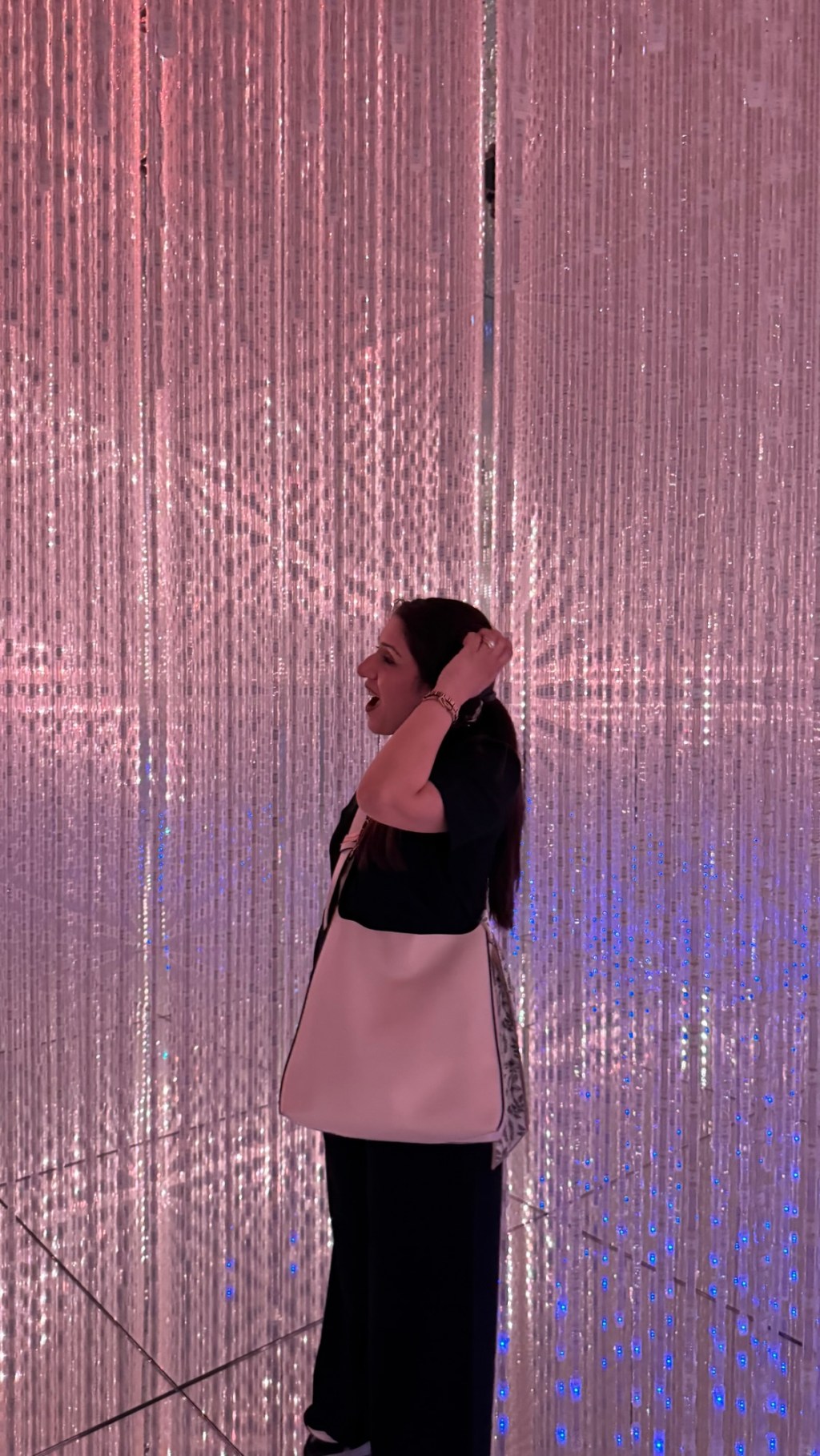
By the second week of walking Tokyo, I had begun to notice what was missing — from the crowd, from the plate, from the mirror at night in the hotel room. What was missing was the disease I had come to think of as the price of being fifty.
I did not see a visibly overweight person in two weeks. Not one. I did not see the exhausted, over-caffeinated faces I know from my own city. I did not see the low simmer of inflammation that lives now in the skin of most women my age — the kind you learn to spot in a clinic when you have looked at enough of them. I saw grandmothers in their seventies working the fish counter with unhurried precision. I saw men in their eighties bowing at the door of restaurants they had run for forty years. I saw a country of visibly aging bodies which had, apparently, been permitted to age.
As a physiologist, I could not stop the second observation once it arrived. I would not have got sick here.
Or perhaps I would have — genetics does not lift itself off a passport at the border — but the disease that came for me in my late forties, the Hashimoto’s that turned my immune system against my thyroid, the visceral fat that arrived with menopause, the brain fog that took my sentences before I could finish them — all of it is a story about a body kept too long in survival mode. Sympathetic dominance. Cortisol elevated, day after day, year after year, until the immune system loses its sense of what is self and what is threat. Multiple moves in twenty-seven years. A career started, paused, restarted in a new city, paused again. No community that stayed still long enough to become community. A physiology I know from the inside, in the way we know a mechanism when it has broken in our own body.
And here, here was a country that had, without seeming to try, built a life and shape a body could live inside without breaking.
I want to be careful. This is not the tourist’s romance. Japan has its own overwork, its own loneliness, its own grief; the elders sweeping the temple steps are not always sweeping by choice. I am not arguing that Japan has solved being human. I am making a smaller argument, and a more useful one: that a handful of habits, practised at the level of a whole culture, add up to a biology quite different from ours. That the culture is the clothing biology wears. And that most of what I saw is available to anyone willing to name it and impossible for most of us to do alone.
Five habits, then. Not a diet. Not a wellness plan. A different relationship between the daily and the body, the habits that make us both healthy and, beshak, more fully human.
1. Eat until you are not hungry, not until you are full.
Okinawan elders have a phrase for it: hara hachi bu. Eat to eighty percent. It sounds like restraint. It is closer to arithmetic. Satiety signals from the gut take twenty minutes to reach the brain, a lag written into our physiology, a delay we cannot bargain with, and a culture that eats slowly, in small courses, with a bowl held rather than a plate loaded, has simply built the meal around a truth the rest of us have been taught to override. Insulin resistance. Visceral adiposity. The chronic low-grade inflammation that is the soil of nearly every modern disease. These are not moral failings. They are what accumulates, meal after meal, when we finish eating before our own biology has finished telling us to stop.
2. Let movement be familiar, not through appointment only.
Fewer than five percent of Japan’s population holds a gym membership, against more than twenty percent in the United States and yet the country outwalks nearly all of us. They walk to the station, up the stairs, through the concourse, to the next platform. They stand in the trains rather than sit. They live in apartments too small to gather dust and homes that ask them to bend and rise a dozen times a day. Movement is not scheduled, dreaded, and skipped. It is folded invisibly into the architecture of an ordinary day. The body does not know the difference between a workout and a walk to the market. It only knows whether it moved.
3. Let silence be a physiology, not a manner.
The quiet on a Tokyo train is not merely etiquette. A nervous system granted regular, unforced silence is a parasympathetic one: rest, digest, repair, rather than the low sympathetic hum most of us live inside now, the hum that used to be reserved for danger and is now called normal. Modern life has confused stimulation with aliveness. Japan has not. It rations noise, rations attention, rations even eye contact on the train, and gives the body back the setting in which it was designed to spend most of its hours. I felt the difference in my own chest within a week. A physiologist could plot it: heart-rate variability rises where the sound falls.
4. Give the small ritual your whole attention.
The way the tea is poured. The way the gift is wrapped, corners folded with a precision that has nothing to do with the price of what is inside. The way the shopkeeper bows a fraction lower than the bow requires. The way the noodle master ladles the broth as though it were the first time he had ever done it, at seventy-eight, with the twenty-thousandth customer of his life. None of it is efficient. All of it is a kind of devotion, care as a discipline, practised on objects and gestures too small to notice, until the practice becomes the person. The physiological reading of this is not sentimental. Attention regulates. Attention slows. A life spent giving small things their full weight is a life spent, hour by hour, out of the fight-or-flight the rest of us have made our resting state. There is a rooh to it, a soul the culture has organised around the small attentions.
5. Grow old in public, not in hiding.
This is the one that stayed with me longest, and it is not really about the body. It is about what the body is for.
The elderly in Japan are not tucked away. They are behind counters, sweeping temple steps, running the noodle stall at seventy-eight, guiding tourists at the shrine, still needed by the day. Visible. Working. Present. Not a role to be pitied. Not a chapter closed early. Not a woman my age told that the rest of her life is a quiet corner and a cup of tea. And because they are still needed by the day, their bodies remain useful to them — the muscle held, the balance kept, the mind engaged with something outside its own rehearsed grievances. A culture that does not require its old to disappear is a culture whose old do not, in fact, disappear.
I am fifty. Newly through the worst of menopause. Still deep in my thesis. Still, despite the illness, despite the moves, despite the script written for a woman my age, who is not done. I saw my own argument reflected in the face of every seventy-year-old woman running a shop in Kyoto. A woman is not done with life until she is done with life. The Japanese have been quietly practising this belief for a thousand years, without ever needing to argue for it.
I did not come home from Japan with a diet plan. I came home with a way of measuring a day. Was there quiet in it. Was there movement in it. Was there attention paid to something small. Was there a person older than me still visibly at work.
I cannot rebuild my body’s history. The years spent in survival mode are the years I have. But I have finally seen, with my own eyes, the body I might have had, and by extension, the body I might still, at fifty, begin to build from here. Not by moving to Japan. By borrowing, piece by piece, the practices that made the difference: the eighty percent, the walked commute, the rationed noise, the small ritual, the refusal to disappear. A physiology quietly rebuilt around what the culture should be able to give me for free.
Onwards, and forwards. The way the elders in that noodle stall would tell you, if you asked, though they would probably just smile, and pour the tea a little slower instead.




Leave a Reply